Kids, the iPhone 18 Pro has arrived.
How do I put this? When I first got my hands on this device, I actually had a brief moment of doubt—was I holding the wrong unit? The design is essentially unchanged: the cameras are the same, the chassis is identical, and the only discernible difference is that the transition between glass and metal feels slightly smoother to the touch—less jarring than last year’s model.
Alright then—Apple’s designers must have had a relatively quiet year.

(Image source: LeiTech)
Of course, what users care about most right now isn’t how it looks—after all, the two most headline-grabbing features of this year’s iPhone 18 Pro series are “2nm” and “variable aperture.”
The iPhone 18 Pro series not only debuts Apple’s A20 Pro chip built on a 2nm process node but also upgrades its overall thermal management system. During the launch event, Apple emphasized both raw performance gains and sustained performance—leaving many viewers stunned. Online, some users even declared, “The toothpaste tube has finally been squeezed dry!”
Is it really *that* impressive? Today, I’ll run some real-world tests to find out.
Process Node Improvements and Major Thermal Upgrades
Let’s start with the A20 Pro chip.
This year, Apple has finally adopted the 2nm process node. The CPU remains a six-core design—but Apple now brands the two performance cores as “Super Cores.” The GPU expands from six to seven cores; memory bandwidth increases by 50% over the A19 Pro; Apple claims peak GPU performance improves by up to 40%; and the Neural Engine doubles in capacity—now featuring dual 16-core clusters totaling 32 cores.
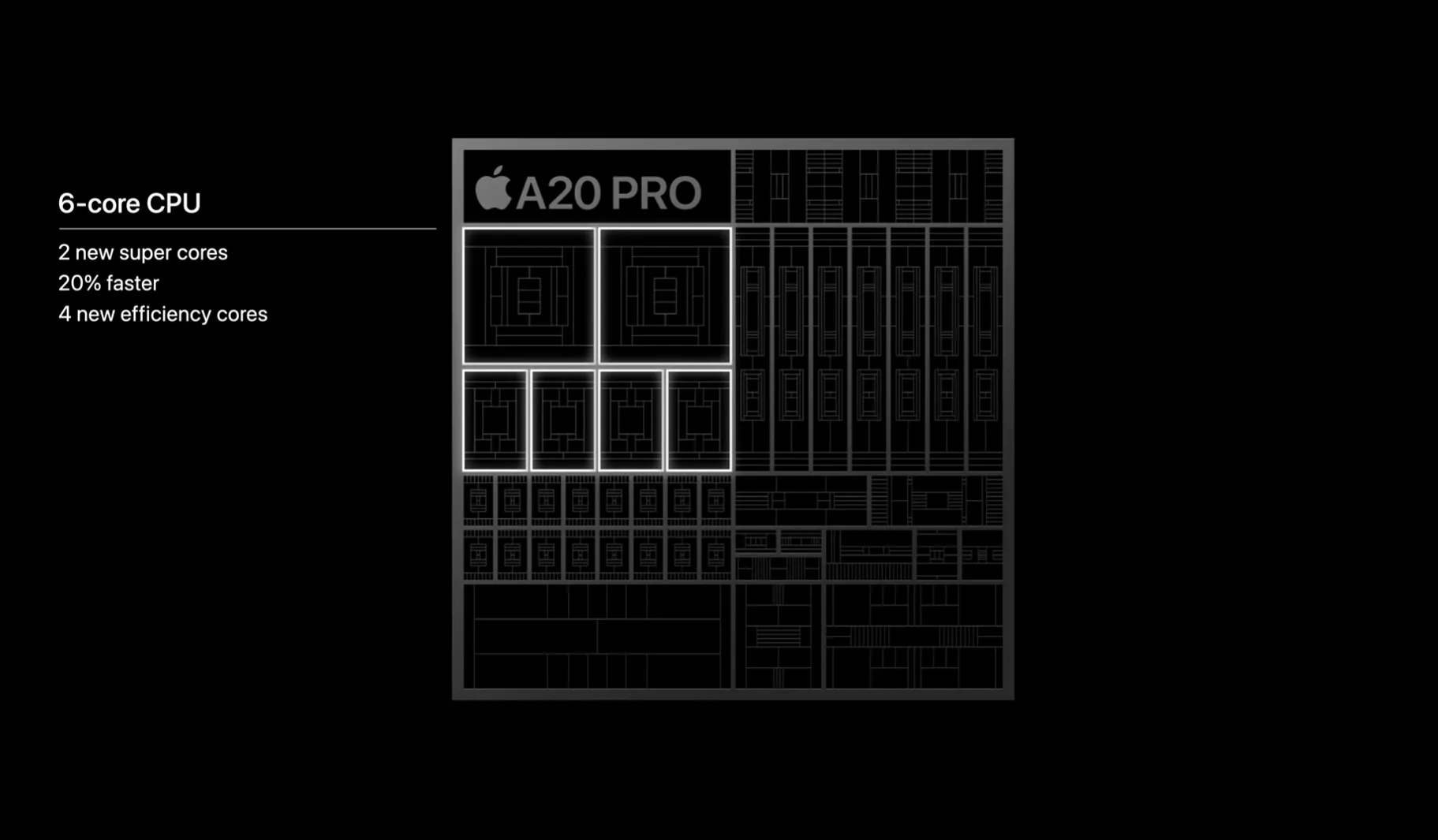
(Image source: LeiTech)
On paper alone, this iteration clearly departs from the past few years’ incremental updates—“a slight frequency bump and a name change.”
However, boosting theoretical specs alone is meaningless. For smartphones—the size of your palm—how long peak performance can be sustained often matters more than raw peak performance itself.
Historically, Apple paid little attention to this. Everyone knows A-series chips grow more powerful each year, yet thermal management remained perpetually “just good enough.” Frame rates looked great at launch—but after extended gameplay, devices would heat up, screen brightness would drop sharply, and performance would throttle. At one point, Low Power Mode practically became Apple’s de facto “gaming mode.”
A noticeable shift occurred only last year: the iPhone 17 Pro series introduced Apple’s in-house vapor chamber (VC) for the first time, and swapped titanium for an aluminum unibody with superior thermal conductivity—enabling heat from the A19 Pro to spread more efficiently across the entire chassis. As a result, long-duration gaming and stress-test stability improved significantly over the iPhone 16 Pro series.
Having tasted success, Apple doubled down on thermal engineering for the iPhone 18 Pro series.

(Image source: REWA Tech)
According to Apple’s official claims, the new VC’s heat-dissipation surface area is triple that of the iPhone 17 Pro’s. Additionally, Apple adopted new thermal interface materials (TIMs) to ensure direct coverage and contact with the SoC’s primary heat-generating regions.
Teardown videos confirm that the heat-spreading plate (vapor chamber) in the iPhone 18 Pro is dramatically larger than its predecessor’s—and between the mainboard and the VC, Apple added a composite thermal material comprising graphite, metal, and thermal foam, significantly reducing thermal resistance and accelerating heat transfer.
Moreover, the A20 Pro’s packaging architecture has changed.
Previously, memory and SoC were stacked more compactly. This generation, Apple adopted a side-by-side layout—similar to M-series chips in Macs—with memory placed adjacent to the SoC. This allows heat generated by the A20 Pro to travel directly to the VC without passing through intervening layers, then rapidly distribute across the much larger vapor chamber and into other areas of the chassis.
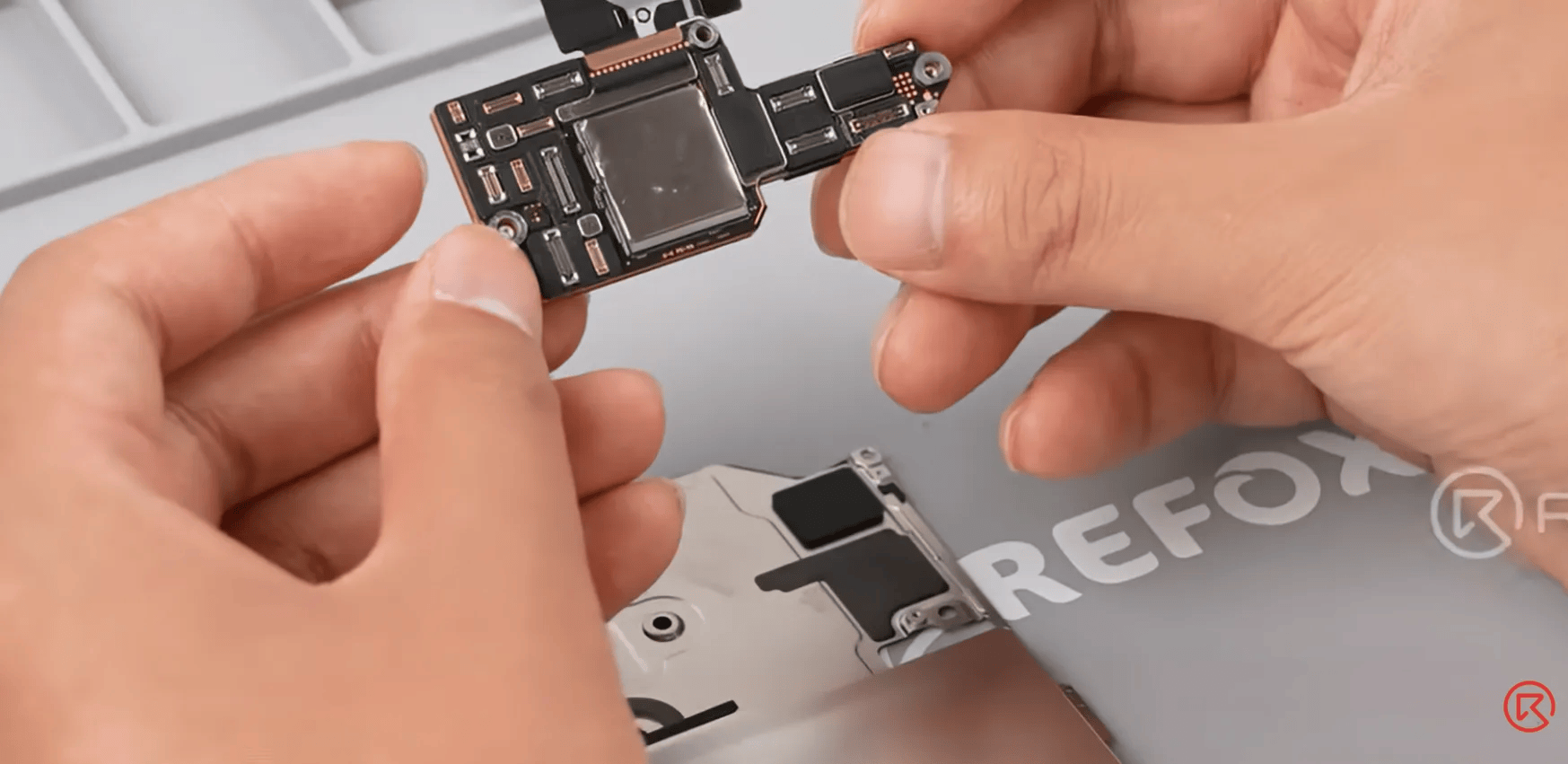
(Image source: REWA Tech)
On paper, Apple has invested heavily in thermal management this year: the new 2nm process node, a re-engineered chip package, and a vapor chamber whose surface area triples that of last year’s model.
So the question remains: Does the iPhone 18 Pro series’ new thermal design actually work? And how does device temperature behave during everyday use when heat dissipation is significantly improved?
Let’s dive straight into testing.
Full-Throttle Performance: Single-Core and Multi-Core Results Dominate the Field
First up: Geekbench 7.
In CPU benchmarks, the iPhone 18 Pro scores 4,025 points single-core and 11,418 points multi-core; the iPhone 18 Pro Max scores 4,006 and 11,317, respectively—virtually identical results, well within normal measurement variance.
Since Apple touts substantial gains, let’s compare against the previous two generations.
Per Geekbench’s official database, average scores for the iPhone 17 Pro are 3,157 (single-core) and 8,777 (multi-core); the iPhone 17 Pro Max scores 3,168 and 8,804. Earlier, the iPhone 16 Pro achieved 2,895 and 7,796, while the 16 Pro Max scored 2,871 and 7,691.
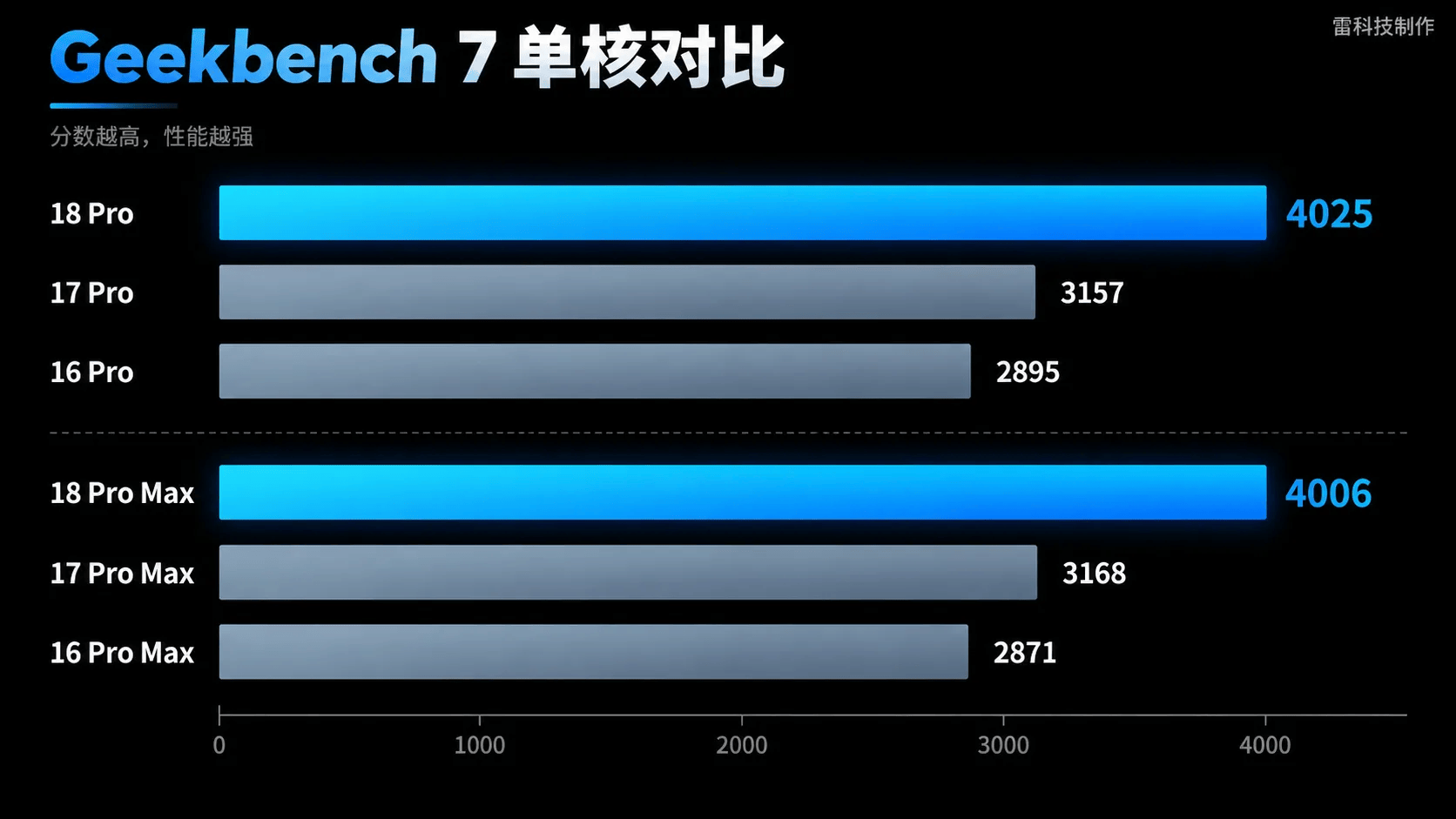
(Image source: LeiTech)
Compared to the iPhone 17 Pro, the iPhone 18 Pro delivers ~27.5% single-core and 30.1% multi-core improvements; for the Pro Max, gains are ~26.5% (single-core) and 28.5% (multi-core).
By any measure, year-over-year improvements exceeding 20% are extraordinary.
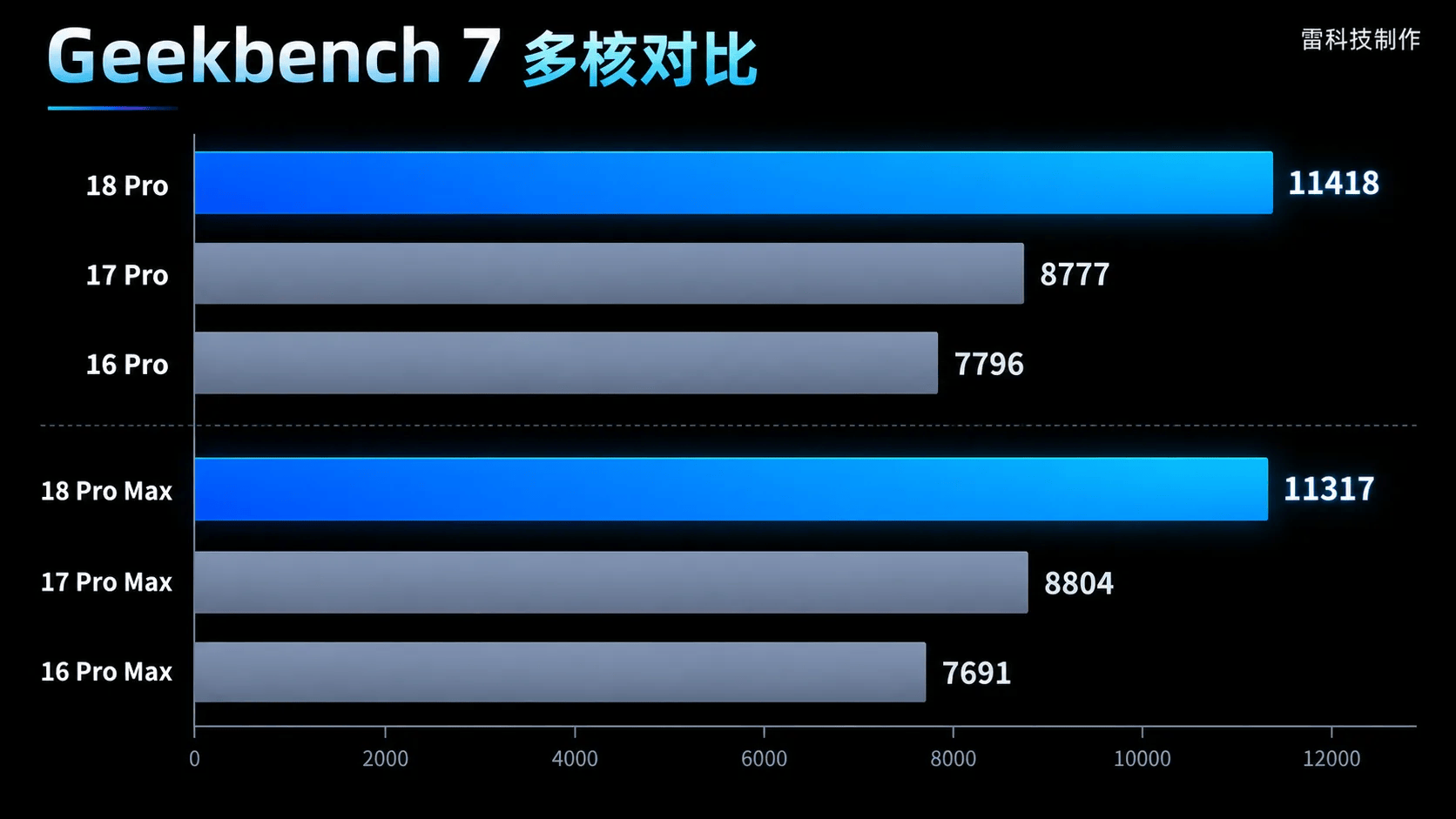
(Image source: LeiTech)
In more gaming-relevant 3DMark tests—Steel Nomad Light, Solar Bay Extreme, and Wild Life Extreme—the iPhone 18 Pro scored 3,899, 2,933, and 8,149 points respectively; the iPhone 18 Pro Max scored 3,604, 2,966, and 7,929.
Interestingly, aside from Solar Bay Extreme, the smaller iPhone 18 Pro outperformed the Pro Max in the other two tests.
For comparison, UL’s database shows the iPhone 17 Pro scoring 2,412, 1,963, and 5,304 in those same three tests; the 17 Pro Max scored 2,469, 1,998, and 5,405.
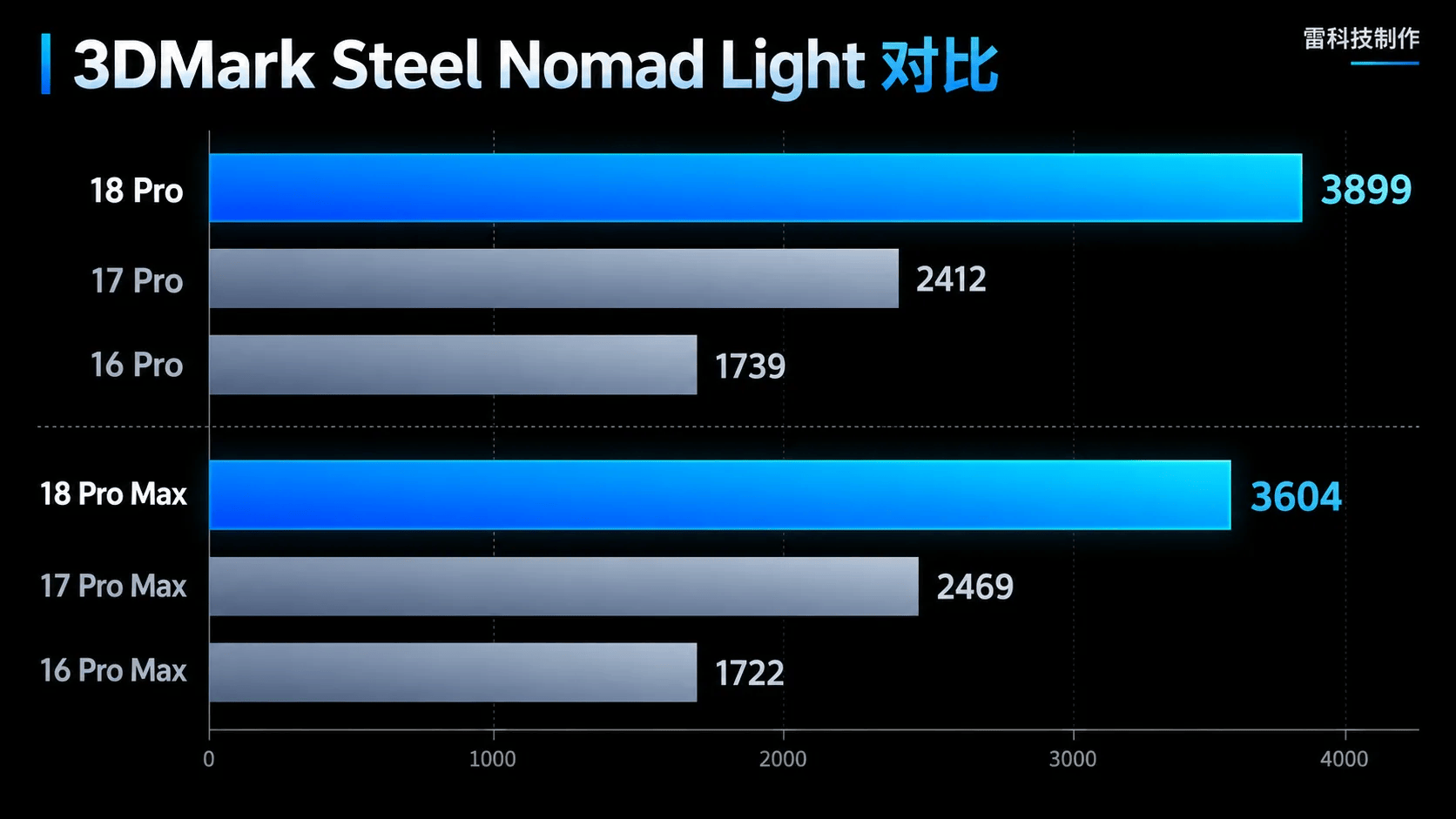
(Image source: LeiTech)
Against the iPhone 18 Pro Max, these represent gains of 46%, 48.4%, and 46.7%—fully aligning with Apple’s claim of “over 40% improvement.”
While such extreme synthetic benchmarks are mainly for entertainment, they undeniably demonstrate clear performance uplifts.
The iPhone 18 Pro Delivers Exceptional Gaming Performance
Now comes the critical part! How does the A20 Pro perform in real-world gaming scenarios?
To answer this, I specifically tested two demanding titles: *Wuthering Waves* and *Zenless Zone Zero*. Lightweight games like *League of Legends: Wild Rift* or *Peacekeeper Elite* require no testing—they’re guaranteed smooth.
First, *Wuthering Waves*: widely regarded in the gaming community as a benchmark “performance killer.”
Under maximum graphics settings and 60 FPS, a 20-minute gameplay session yielded an average frame rate of 57.2 FPS on the iPhone 18 Pro; the iPhone 18 Pro Max averaged 58.5 FPS. City exploration, motorcycle traversal, and outdoor combat all ran smoothly.
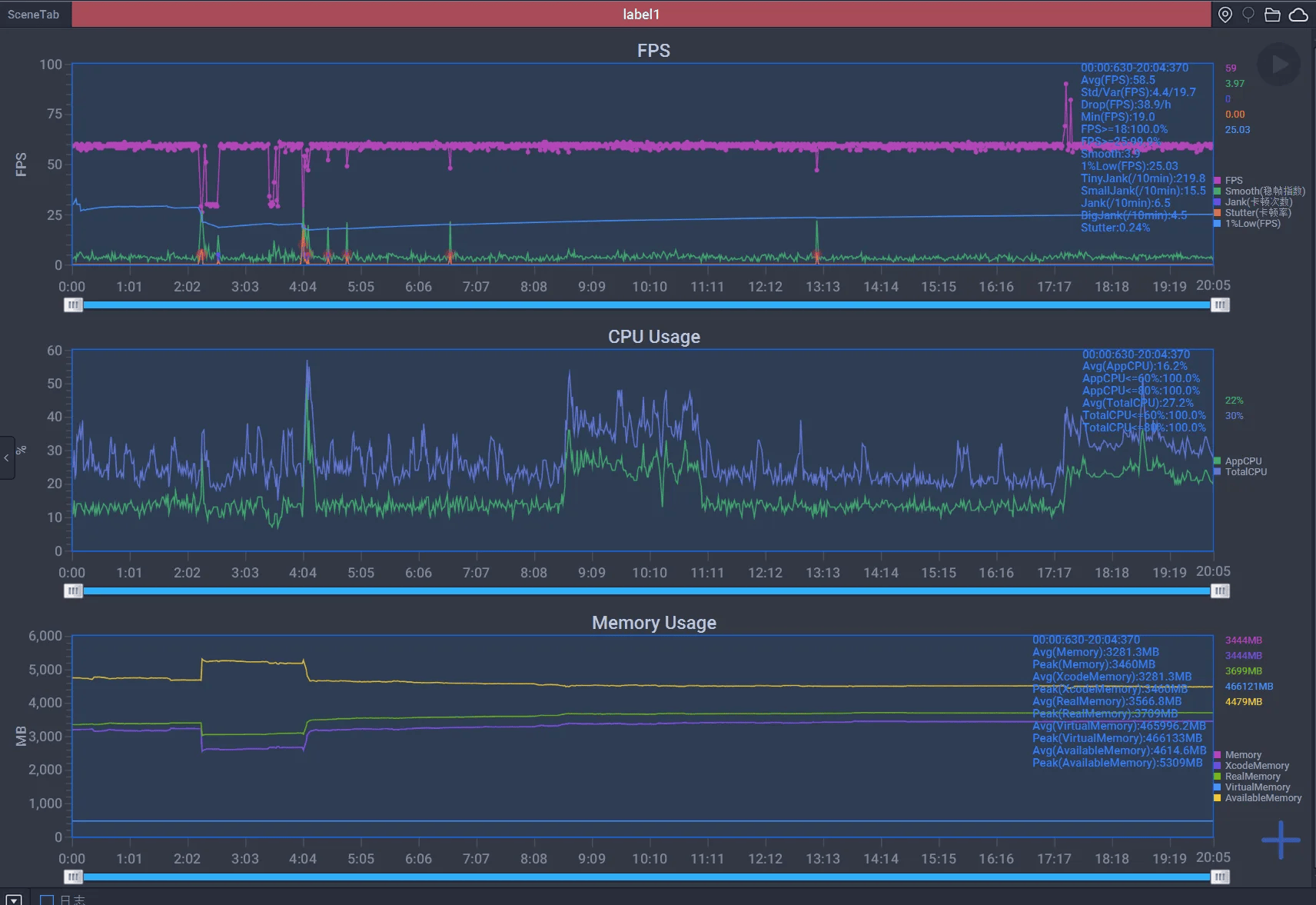
(Image source: LeiTech)
What about temperatures…?
At ambient room temperature (~24°C), the iPhone 18 Pro’s peak chassis temperature reached 44.9°C, while the iPhone 18 Pro Max peaked at 46.2°C. Both devices feel warm to the touch—but heat distribution is notably broader this time: warmth spreads across the camera module area, upper/mid-back panel, and frame—avoiding localized hotspots.
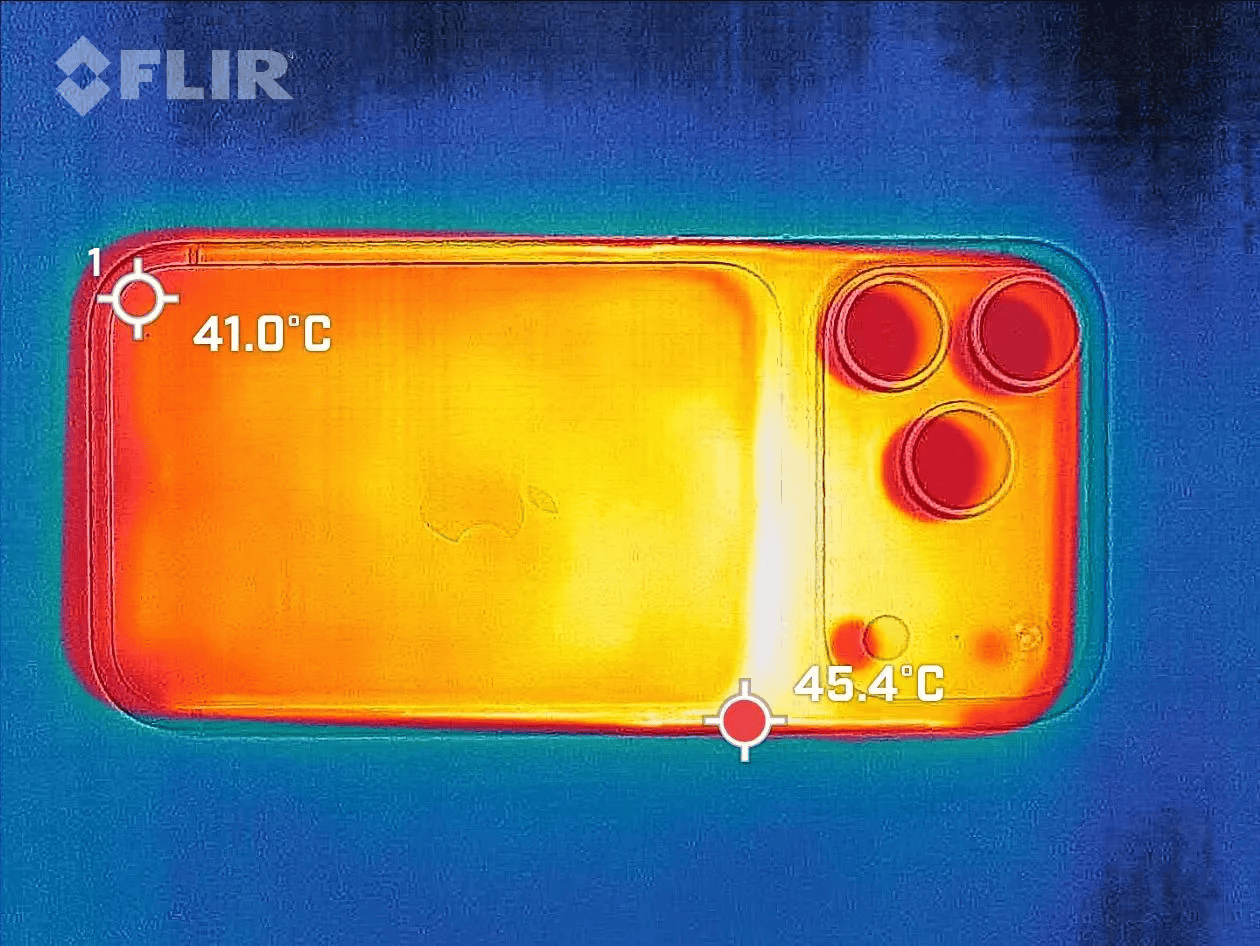
(Image source: LeiTech, iPhone 18 Pro)
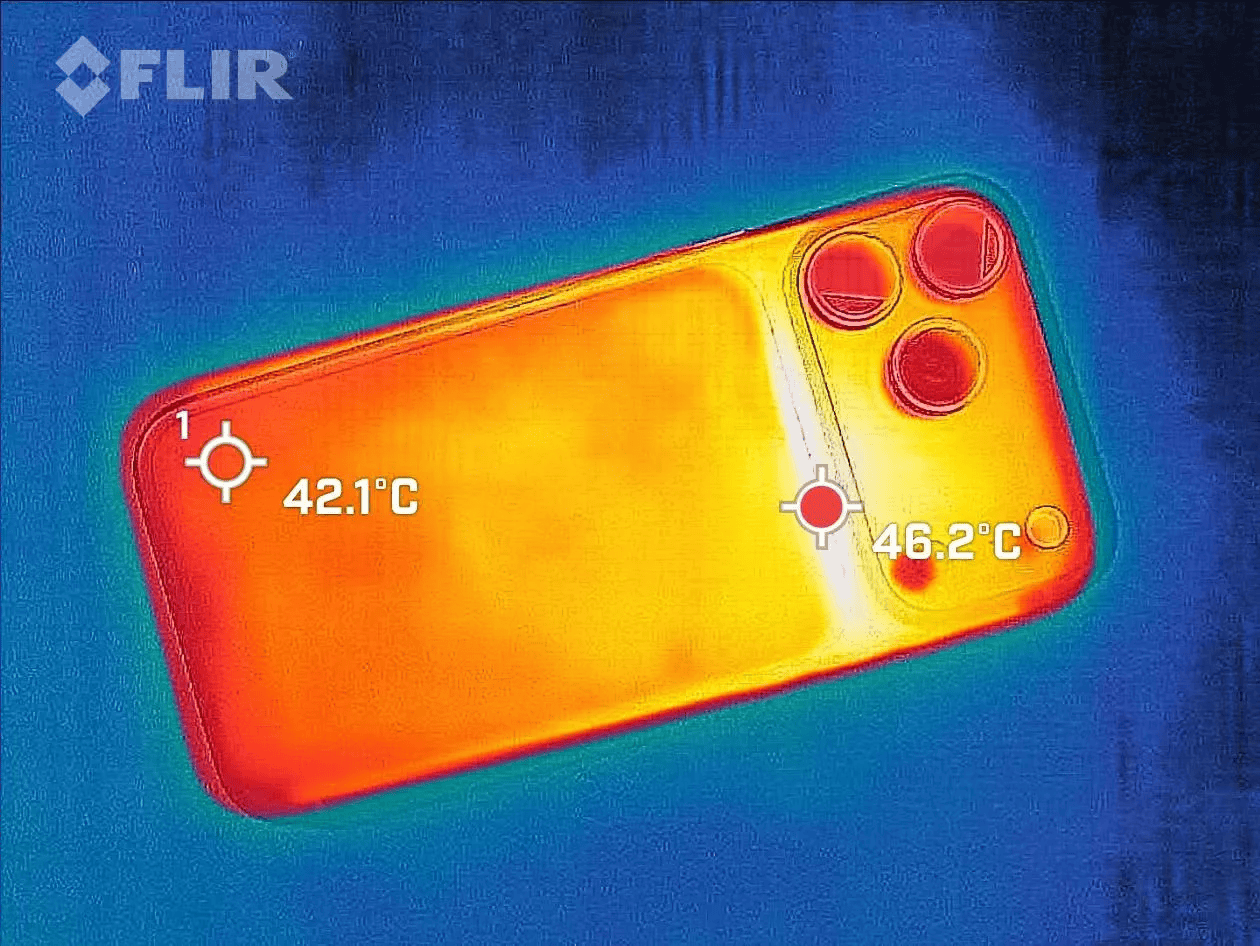
(Image source: LeiTech, iPhone 18 Pro Max)
Next up: *Zenless Zone Zero*, MiHoYo’s relatively newer title.
I set graphics to “Ultra High,” locked frame rate at 60 FPS, and ran a 20-minute mix of daily tasks and combat sequences. The iPhone 18 Pro averaged 59 FPS; the iPhone 18 Pro Max averaged 59.2 FPS.返回搜狐,查看更多