
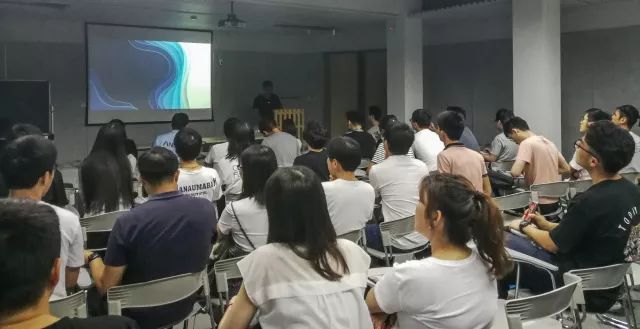
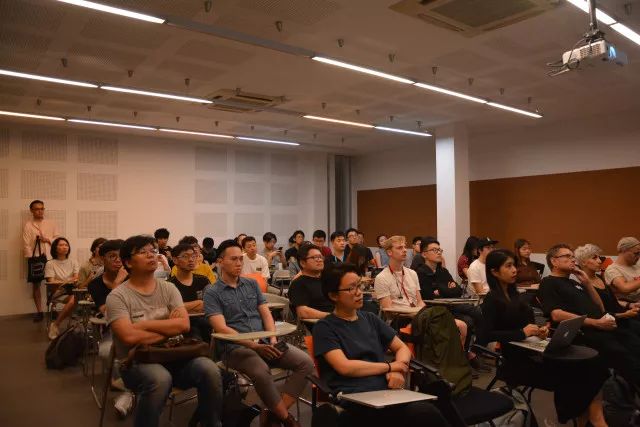
2018年7月2日晚,随着第八届上海“数字未来”工作营DigitalFUTURES YOUNG系列活动第三场学员研讨会的成功开展,DigitalFUTURES YOUNG系列活动在工作营期间已暂告一段落。活动期间主办方组织了三场研讨会,总共超过200人次参与,其中17名优秀学员上台分享了各自的研究成果,就数字设计与智能建造领域的一系列问题与各位导师与学员进行了深入的探讨。
As the last Workshop Student Seminar in the DigitalFUTURES YOUNG program was organized successfully on the night of July 2nd 2018, the DigitalFUTURES YOUNG program has come to an end during the workshop. There are three seminars in the program, in which more than 200 supervisors and students in total participated. 17 outstanding students gave lectures on their research and had a discussion with the audience in the field of computational design and digital fabrication.
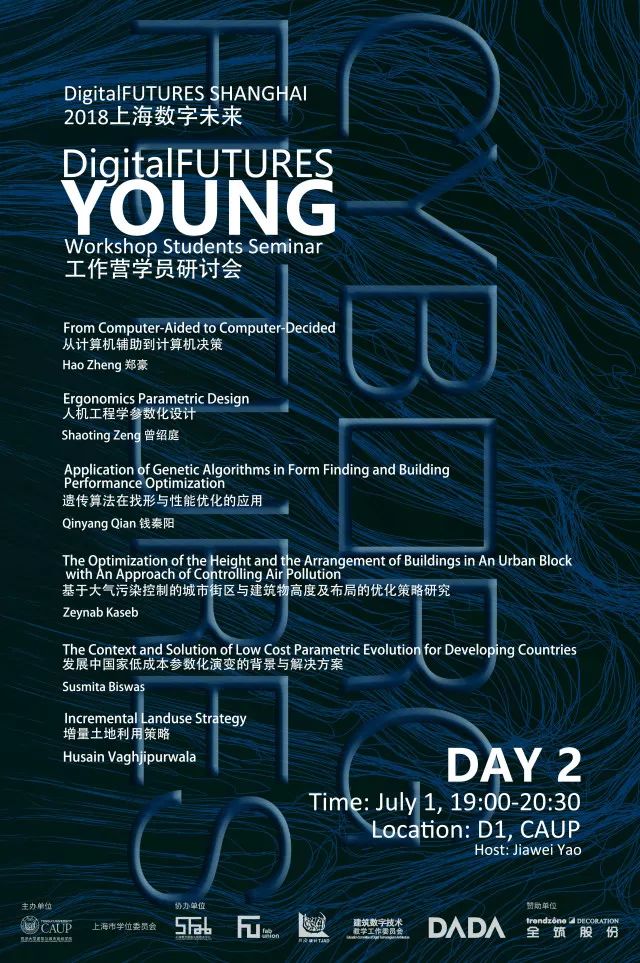
从计算机辅助到计算机决策
From Computer-Aided to Computer-Decided

郑豪
Hao Zheng

郑豪现为宾夕法尼亚大学设计学院的博士生。他是程序员以及设计研究员,研究领域为机器学习、机器人技术、混合现实以及生成设计。郑豪认为,许多数字建造和AR辅助设计等虽然极其依赖计算机的辅助,但最终都是人工来进行和完成的。他最初开发的计算机决策设计模型仍然是主流的图像-图像的模式,而这个模型的问题就是受限于像素点。之后他对于模型进行了优化,他尝试从一种新的角度来理解建筑平面,使得新模型在输入的时候是以矢量而不是图像的方式,由此计算机计算和学习的速度得到了飞跃式的增长。郑豪认为,人工智能+机器人建造合作完成建筑从生成设计到实际建造的全套流程将成为未来的趋势。所以当我们面对未来的冲击时,建筑师应如何面对并找到自己的位置是一个关键点问题。
Hao Zheng is currently a Ph.D student at the University of Pennsylvania, School of Design. He is a programmer and design researcher, specializing in machine learning, robotic technology, mixed reality, and generative design. Hao Zheng believes that although plenty of digital construction and AR-aided design seem to rely heavily on computer assistance, the work are actually completed manually. The computer decision-making model he originally developed is still the mainstream image-image model, and the problem with this model is the limitation of the pixel points. After that, he optimized the model. He tried to understand the building plan from a new perspective, so that the new model was input as a vector rather than an image, and the speed of computer calculation and learning increased a lot. Hao Zheng believes that it is artificial intelligence-robot cooperation to construct buildings from design to fabrication that will become the future trend. When we face the shock of digital future, it is a key issue for architects to find their orientation.

人机工程学参数化设计
Ergonomics Parametric Design

曾绍庭
Shaoting Zeng

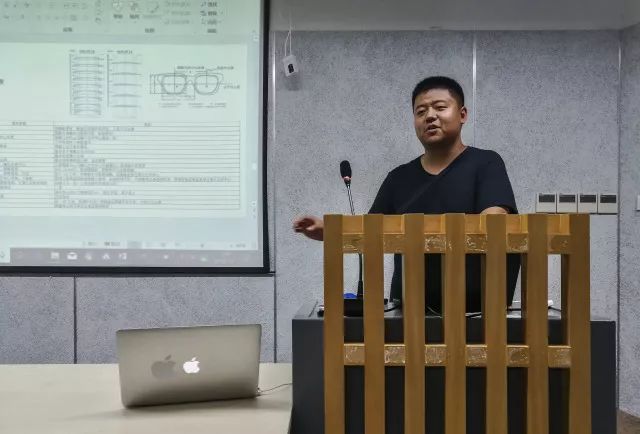
曾绍庭是清华大学美术学院工业设计系设计学博士,研究方向是设计形态学数字形态设计。曾绍庭从对参数化的理解切入,他认为参数化最重要的两点为关系+参数,其中他对参数获取的想法与人机工程学紧密相关。他认为如何将人机工程学与参数化结合的关键在于生成一词。随后他向我们介绍了他的两个个项目,生成座椅及眼镜。学员们对于曾绍庭在完成这两个实际项目中运用的插件和算法表现出来了强烈的兴趣,同时也对座椅和眼镜的设计提出了多种建议并与曾绍庭共同探讨,例如椅子如何做到定制化,是否可以做到动态调整、眼镜的参数从何而来、是否可用传感器和3D扫描获取人体数据等。大家在激烈的讨论中碰撞出了思想的火花。
Shaoting Zeng is Ph.D of Design, Department of Industrial Design, Academy of Art and Design, Tsinghua University. His research direction is about morphology digital form design. Shaoting Zeng cuts in the topic from the understanding of parametric. He believes that the two most important points of parametric are relationship and parameters, and his idea of parameter acquisition is closely related to ergonomics. He believes that the key to combining ergonomics with parametric is to generate the word. He then introduced us to his two projects, generating seats and glasses. The participants showed great interest in Zeng Shaoting's plug-ins and algorithms used in completing these two practical projects. He also put forward various suggestions for the design of the seats and glasses and discussed with Shaoting Zeng , such as how to customize the chair. Whether it can be dynamically adjusted, where the parameters of the glasses come from, whether sensors and 3D scans can be used to obtain human body data. Spark of thought has been born from the heated discussion.
遗传算法在找形和多目标性能优化的应用
Applications of Genetic Algorithms in Form Finding and Multi-Objective Optimization
钱秦阳
Qinyang Qian
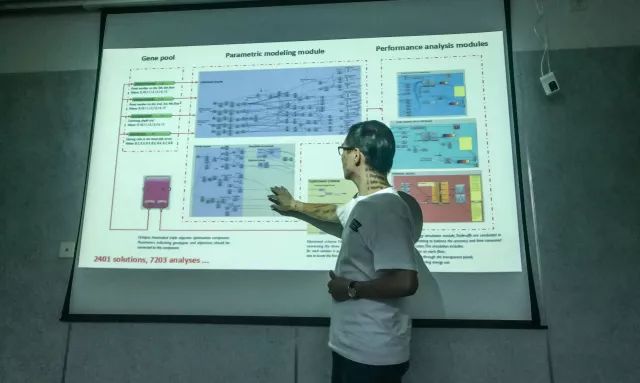
钱秦阳是一个喜欢从数据合理性开始设计的设计师,他来自伦敦大学学院(建筑环境),擅长可持续建筑设计、遗传算法、风、光、热环境及舒适度分析以及BIM技术的协同运用。钱秦阳以一个自己的方案来讲解遗传算法的运用。方案以热舒适分析作为出发点,将其量化为多个指标,建立基因库(几何形)),而表型就(外窗)随之发生变化。基因库-参数化建模-性能分析-遗传算法优化这整个流程,针对不同侧重得到了两千多种解决方案。他选择了热舒适度较为均衡的方案作为最终选择。随后,钱秦阳对这个方案进行了总结,提出了可以优化的方向。仿生vs有机?“人类在面对挑战时,从自然中抽象出良好的设计理念,是一种通过模仿自然界经过时间考验的模式和策略来寻求可持续发展的解决方案”
Qinyang Qian, a designer who likes to start the design from data rationality, UCL Bartlett, Architecture (Building Environment), good at sustainable architecture design, genetic algorithms, wind, daylight, thermal and comfort analysis in built environment, BIM application and collaboration. Qinyang Qian uses his own project to explain the application of genetic algorithms. The program uses thermal comfort analysis as a starting point, quantifies it into multiple indicators, builds a gene pool (geometry), and the phenotype (outer window) changes accordingly. Genebank-Parametric Modeling-Performance Analysis-Genetic Algorithm Optimization This process has more than 2,000 solutions for different focuses. He chose a more balanced approach to thermal comfort as the final choice. Subsequently, Qian Qinyang summarized this plan and proposed a direction that can be optimized. Bionic vs organic? “Humans abstract a good design concept from nature in the face of challenges. It is a solution to seek sustainable development by imitating the time-tested patterns and strategies of nature”.
基于大气污染控制的城市街区与建筑高度及布局的优化策略研究
The Optimization of the Height and the Arrangement of Buildings in An Urban Block with An Approach of Controlling Air Pollution
Zeynab Kaseb
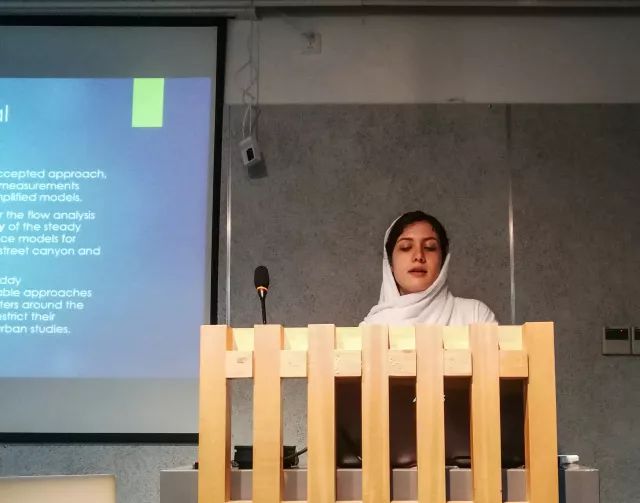
Zeynab是伊朗Shahid Beheshti大学建筑技术专业的硕士生,她的研究领域专注于计算流体动力学(CFD)和城市通风。众所周知,实地的全面测量受限于昂贵的仪器、不可控的环境因素以及复杂的校准程序。所以Zeynab的目标是让风的舒适度控制在行人适应的程度、减少空气污染以及改善的城市通风。她使用了Butterfly插件及遗传算法,前者允许用户与分析结果来交互,并加载CFD模拟的结果;后者通过模拟自然进化过程搜索最优解的方法来辅助生成解决方案。她以一个街区为例得出的三种布置方法,说明了建筑高度在城市设计以及大气污染控制中的重要性。
Zeynab is a master student of architectural technology, Shahid Beheshti University in Iran, while her research area is focusing on CFD and urban ventilation. As we know, comprehensive measurements are limited by expensive instruments, uncontrollable environmental factors, and complex calibration procedures. Zeynab’s goal is to comfort the wind to the pedestrian level, reduce air pollution and improve urban ventilation. She uses butterfly for grasshopper to allow users to interact with the analysis results and load the results of the CFD simulation. She also uses genetic algorithm to generate a solution by simulating the natural evolution process to search for the optimal solution. She utilizes three methods of one block as an example to illustrate the importance of building height in urban design and the control of air pollution.
发展中国家低成本参数化演变的背景与解决方案
The Context and Solution of Low Cost Parametric Evolution for Developing Countries
Susmita Biswas
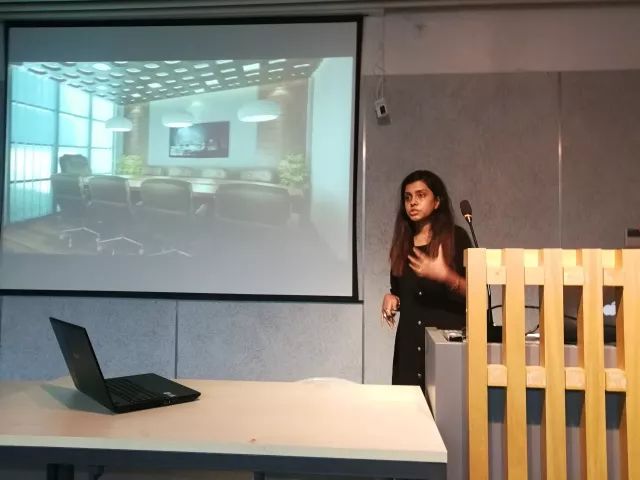
Susmita Biswas Sathi是孟加拉第一位使用参数化设计方法的设计师和企业家。她完成了她孟加拉欧斯特的B.Arch,她一直热衷于学习参数化架构。而如何将真正低成本的参数化设计运用到室内设计中,这是 Susmita Biswas Sathi主攻的方向。首先她提出一个问题:人们是否真的偏好静态的室内设计?答案当然不是绝对的,所以Susmita采用参数化的设计手段来进行她的室内项目。而作为一个发展中国家,孟加拉对于室内的的低成本设计也有着极大需求。Susmita结合二者的诉求所完成的诸多项目也令人印象深刻。
Susmita Biswas Sathi is an architect and entrepreneur of the first approach in parametric design in Bangladesh in reality. He has completed his B.Arch from AUST, Bangladesh, and he was always keen to learning parametric architecture. Susmita Biswas Sathi is the architect and entrepreneur of Bangladesh's first parametric design approach. She completed her B.Arch from AUST in Bangladesh and she is always keen to learn parametric architecture. How to apply a truly low-cost parametric design to interior design is the main direction of Susmita Biswas Sathi. First she asked a question: Do people really prefer static interior design? The answer is certainly not absolute, so Susmita uses parametric design to carry out her indoor projects. As a developing country, Bangladesh also has a great demand for low-cost interior design. Susmita's many projects, combined with the demands of both, are also impressive.
土地增量策略
Incremental Landuse Strategy
Husain Vaghjipurwala
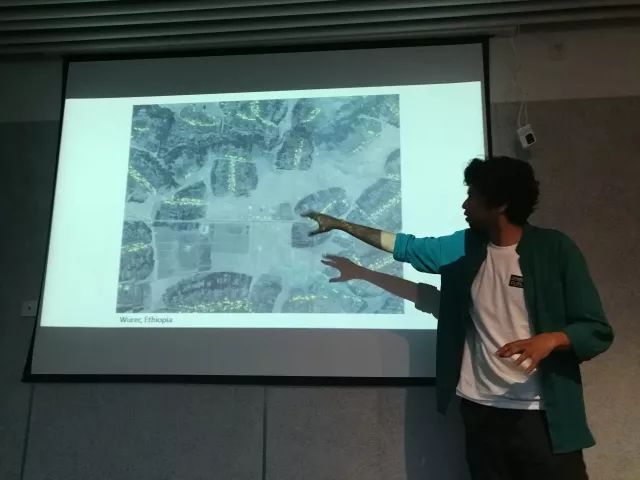
HUSAIN是一名硕士生,在魏玛包豪斯大学学习城市主义。他的兴趣在于积累和收集数据,并研究各种建模方法。Husain Vaghjipurwala尝试使用计算方法来进行土地增量的利用规划。他向我们讲述了他的一个位于埃塞俄比亚的研究项目,首先他分析并输入场地里各交通元素、地理数据以及规划现状等方面的数据,然后进行参数化建模和可视化展现。Husain通过图解直观地向大家展现出,不同业态以及土地利用是如何随着城市发展的进程而发生改变的。他也依据他对于该城市分析整合出的数据,建立了一个城市模型,以供后续研究。
HUSAIN is a master student, and study Advanced Urbanism at Bauhaus University Weimar. His interests lie in accumulating and assimilating data and look at various ways of modelling it. Husain Vaghjipurwala attempts to use computational methods for land use planning. He told us about one of his research projects in Ethiopia. First, he analyzed and input data on various traffic elements, geographic data, and planning status in the site, and then conducted parametric modeling and visualization. Husain graphically shows you how different formats and land use have changed as the city progresses. He also built an urban model based on his data for the analysis of the city for follow-up research.
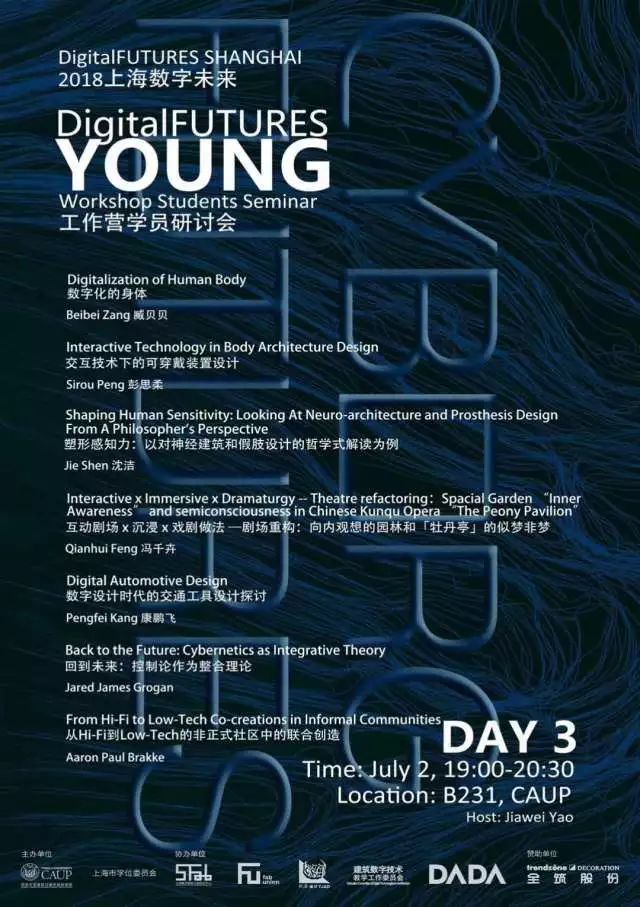
数字化的身体
Digitalization of Human Body
臧贝贝
Beibei Zang
臧贝贝是上海独立设计师品牌Dirty Baby创始人/设计师。本科毕业于清华大学服装设计专业,硕士毕业于伦敦艺术大学女装设计专业。2015年在上海创立独立设计师品牌Dirty Baby,期间多次参加巴黎时装周,东京时装周和上海时装周Showroom, 并获得英国Fashion Scout设计师奖项。在近年的各种设计领域和新媒体艺术中,数字化起到了很大作用,但是真正把数字化结合进去的非常少。到最近几年,服装领域开始出现对数字化更多应用的迹象。
Beibei Zang is the brainchild of Shanghai independent fashion brand Dirty Baby. After graduated from Tsinghua University, Fashion Design, She started her study in University of the Arts London, Fashion Design Womenswear, and got her Master Degree. In 2015, Dirty Baby launched. Last 3 years, Dirty Baby participated in the showrooms of Paris Fashion Week, Tokyo Fashion Week and Shanghai Fashion Week, and got the award of Fashion Scout London. These years, digital technology has been widely used for art & design. For fashion design, however, these trends have been relatively limited, even though there are a couple of sophisticated examples which combine fashion and digital technology. We are glad to see a welcome indication that digital technology is coming more and more closely to fashion design.
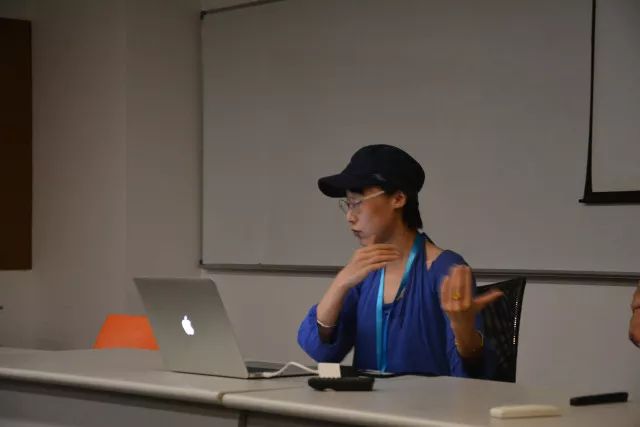
交互技术下的可穿戴装置设计
Interactive Technology in Body Architecture Design
彭思柔
Sirou Peng
来自巴特莱特建筑学院互动建筑实验室的彭思柔分享了她在人与空间交互形式的探索。人类的身体是由一套复杂的感知系统组成,能使我们在环境中通过感知和反馈与外界交流。彭思柔介绍了她的交互装置,Aposema是一款探索社交信息传达方式的可穿戴装置。使用肌肉传感器去捕捉穿戴者的面部表情并驱动软性机器改变形状和改变颜色,通过虚拟现实技术对装置形变的捕捉去解锁面部表情相对应所要传达的信息。
Sirou Peng from the Interactive Architecture Lab of Bartlett School of Architecture shared her exploration of interaction between man and space. Human bodies are complex systems that allowing us to communicate with surrounding environment through sensing and sending feedback. Sirou Peng introduced her interactive device, Aposema, a wearable installation uses muscle sensors to capture facial expressions of wearers and drive soft machines to change shapes and colors. Virtual reality technology is used to capture the deformation of the device to unlock the information corresponding to the facial expression.
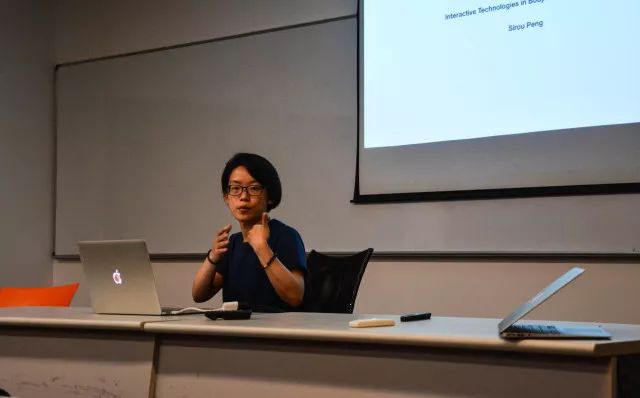
塑形感知力:以对神经建筑和假肢设计的哲学式解读为例
Shaping Human Sensitivity: Looking at Neuro-architecture and Prosthesis Design From A Philosopher's Perspective
沈洁
Jie Shen
沈洁在同济大学攻读硕士学位的最后一年于人文学院学习西方哲学。她的硕士论文主要关注法国哲学家米歇尔·福柯的权力技巧和古希腊的自我技巧,它分析了如何减轻权力的控制,照顾我们的灵魂。此外,也许与这个研讨会更密切相关的是,她研究的法国哲学家伯纳德斯蒂格勒的科学哲学,主要是理性灵魂与技术之间的相互作用。她与我们探讨了许多问题,如果有人可以植入我们不知道或对我们产生负面影响的东西怎么办?我们可以运用自由意志来选择,或者拒绝吗?如果我们缺乏唤起情感的能力,会发生什么?
Jie Shen is in her final year of her Master degree here at Tongji University, in the Humanities College, studying Western philosophy. Her master’s thesis focuses on the French philosopher Michel Foucault’s technique of power and the technique of self in the Ancient Greek sense, which analyses how to alleviate the control of power, to take care of our soul. Furthermore, and perhaps of more closely related to this workshop, she researches French philosopher Bernard Stiegler’s philosophy of science, mainly the interaction between the noetic soul and technology. She has discussed many issues with us. What if someone can implant into us something we are unaware of, or negatively impacts us? Can we use free will to choose, or say no? What will happen if we lack the capability to evoke emotion?
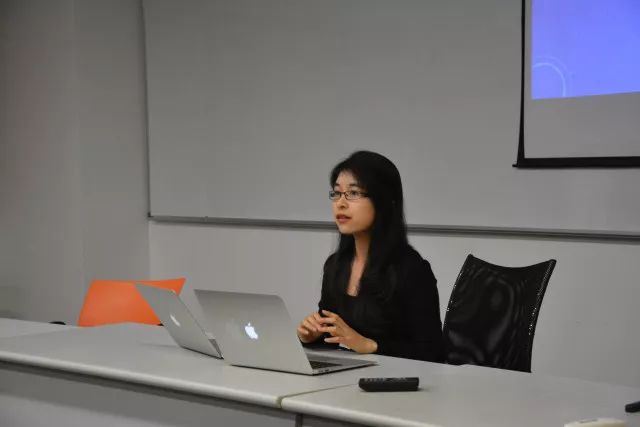
互动剧场 x 沉浸 x 戏剧做法 -- 剧场重构:向内观想的园林和【牡丹亭】的似梦非梦
Interactive x Immersive x Dramaturgy -- Theatre refactoring:Spacial Garden “Inner Awareness” and semiconsciousness in Chinese Kunqu Opera “The Peony Pavilion”
冯千卉
Qianhui Feng
冯千卉,哈尔滨工业大学建筑学院建筑设计及其理论专业硕士,伦敦大学学院巴特莱特建筑学院,表演与互动设计专业硕士。伦敦互动建筑实验室成员。她是一名建筑师,交互设计师,也是一名新媒体艺术家。她目前致力于研究互动建筑与艺术,同时进行沉浸戏剧、互动空间与表演的探索实践。她向我们展示了她所设计的一个互动式沉浸式舞台,将传统昆曲与现代技术手段结合,共同呈现出一场美妙绝伦的昆曲演出。
Architectural Design and Theory, MA in Harbin Institute of Technology. Design for Performance and Interaction, MA, University College London. She is an architect, interactive designer and multi-media artist. She is focusing on Interactive architecture and multi-Media art, as well as immersive theatre and interactive performance. She showed us an interactive immersive stage that she designed to combine traditional Kun opera with modern technology to present a wonderful performance.
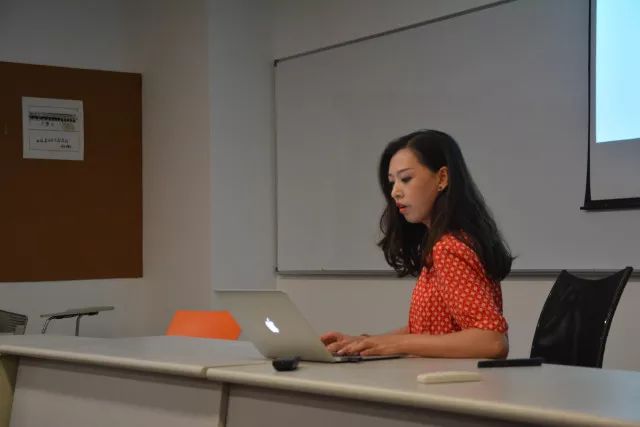
数字设计时代的交通工具设计探讨
Digital Automotive Design
康鹏飞
Pengfei Kang
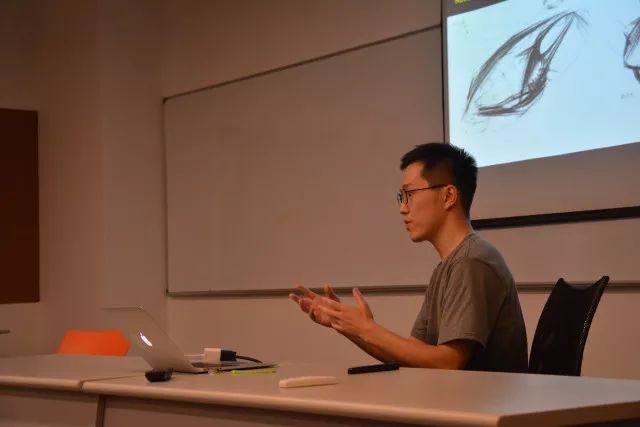
清华大学工业设计硕士和南安普顿大学无人机系统设计硕士康鹏飞同时是臻迪机器人工业设计师和大众集团亚洲未来中心交通工具内外饰设计师。 从学生到设计师,“形态”是他一直以来研究的主题。从产品,公共设施,概念建筑,交通工具,都有所涉及。在学员研讨会中他向我们分享了他在工业产品形态设计上的思考。作为设计师,他把研究方法回到了最质朴的道路上来,在他的《节肢动物形态研究与设计应用》课题中,他认为“软件技术作为手段而不是目的”,所以他把主要精力放到了研究过程本身,以研究成果来支持设计,而设计作为研究成果的载体之一。
Cooper Kang is MA of Industrial Design of Tsinghua University and MSc of Unmanned Aerial Vehicle System Design of University of Southampton. He was industrial designer of Powervision Tech Inc, and now he is exterior & interior designer of Volkswagen Future Center Asia. "Form" is the theme he has always studied from his university to career. It involves products, public facilities, concept buildings, and transportation. He shared his thoughts on the form design of industrial products in the Seminar. As a designer, he returned the research method to the most pristine road. “Study on arthropod morphology and design application”, compared to the result, he focused on the process and methodology of researching, the design application is just one of the carriers of his study.
回到未来:控制论作为整合理论
Back to the future: Cybernetics as Integrative Theory
Jared J. Grogan
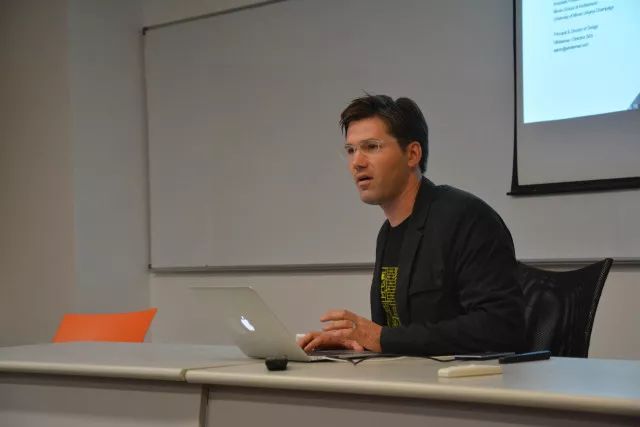
Jared J. Grogan是一位致力于控制论、信息论和第四次工业革命中尖锐设计技术的理论家、历史学家与未来学家。他认为,在剧烈的技术变革时期和指数级的信息洪流中,关于数字未来的论述需要一种范式转向采用综合理论的平台,该平台能够在跨尺度的复杂系统行为中识别模式,并适应人机交互中的非线性动力学。控制论的学科提供了一个强大的启发:用于分析基于反馈循环逻辑的复杂系统——正(干扰)和负(稳态)的跨学科。生物进化为从分子到城市定义控制论有机体提供了一个模式,并重新思考建筑和形式的概念,作为动态共生和相互适应的机制。
Jared J. Grogan is a theorist, historian and futurologist working on cybernetics, information theory and the acute design technologies of the 4th Industrial Revolution. Discourse on digital futures during a period of acute technological change and amidst an exponential flood of information requires a paradigm shift toward the adoption of an integrative theoretical platform equipped to discern patterns in the behavior of complex systems across scales and adaptable to non-linear dynamics in human-machine interaction. The discipline of cybernetics provides a powerful heuristic for analyzing complex system grounded in the logics of feedback cycles — positive (disruption) and negative (homeostasis) — across disciplines. Biological evolution offers a schema for defining cybernetic organisms (cyborgs) from the molecular to the urban — and for rethinking the notions of architecture and form as mechanisms of dynamic symbiosis and co-adaptation.
从HiFi到Low-Tech的非正式社区中的联合创造
From HiFi to Low-Tech Co-creations in Informal Communities
Aaron Paul Brakke
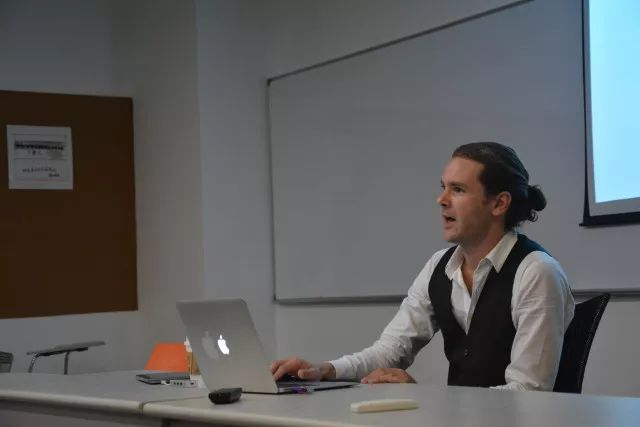
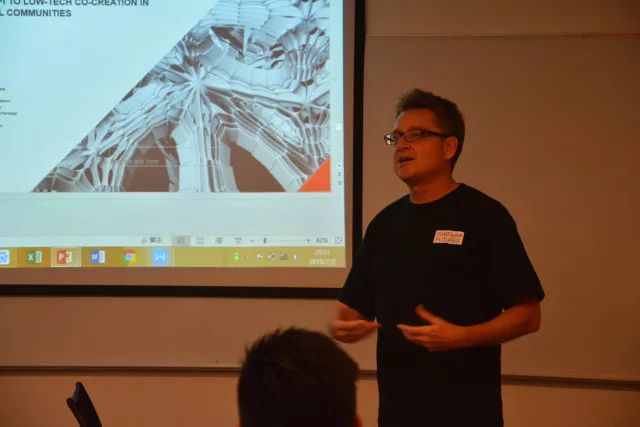
Aaron Paul Brakke是一位美国建筑师和设计师,Whiteknee的创始人和设计总监。他曾在哥伦比亚大学担任建筑学教授。在这里,他建立了创新中心将把数字制造机械与模拟和可视化工具(VR和增强现实)结合起来。他现在是伊利诺斯大学香槟分校建筑系的助理教授。
他目前在伊利诺伊大学香槟分校和哥伦比亚大学(Universidad Piloto de Colombia)担任职位。他在哥伦比亚大学研究数字化工具的进步是如何改变设计、可视化和制造的过程。他在波哥大城市边缘的社区已经做了很多工作。由于该国乡村地区的武装冲突造成的流离失所,使得这些地区以非正式的速度迅速发展。Aaron的这项工作已在南美洲、北美和欧洲发表。
Aaron Paul Brakke is an architect and designer born and educated in the United States. He is Founder and Director of Design at Whiteknee. He was a Professor of Architecture at the Universidad Piloto de Colombia. At this institution, he founded the Center of Innovation which is currently under construction and will blend digital fabrication machinery with tools for Simulation and Visualization (VR and Augmented Reality). He is now Assistant Professor of Architecture at the University of Illinois Urbana Champaign. He currently holds positions at the University of Illinois Urbana Champaign and at Universidad Piloto de Colombia where he explores the way to which advances in digital tools are transforming the processes of design, visualization and manufacturing. Much work has been done with communities inhabiting the urban periphery of Bogota. These zones have been informally developed at rapid rates due to the displacement generated by armed conflict in rural areas of the country. This work has been published and presented in South America, North America and Europe.
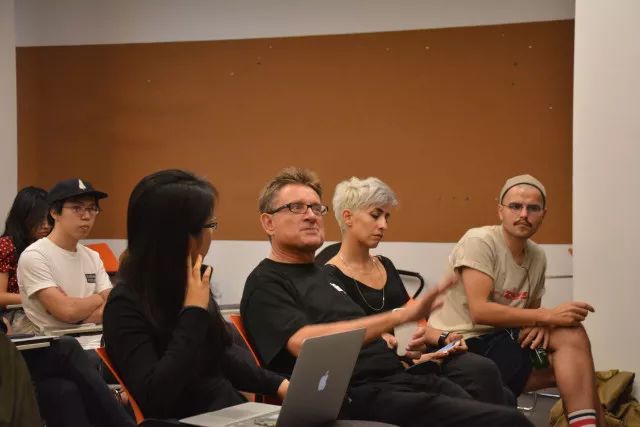
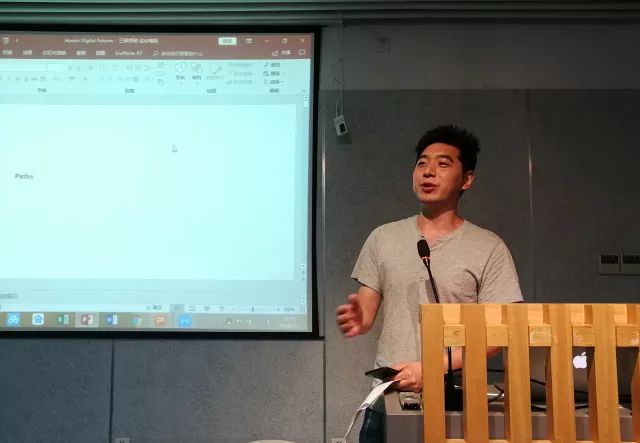
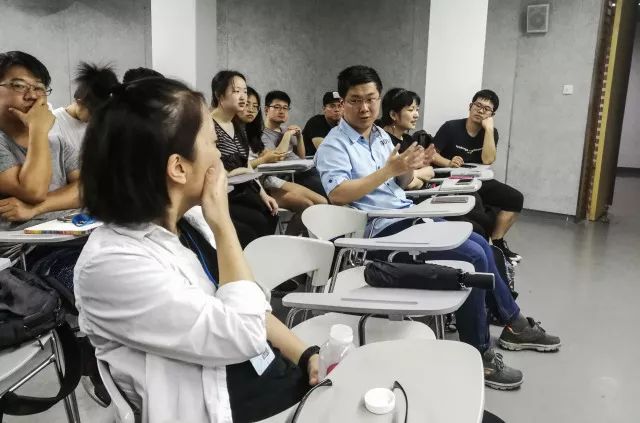
DigitalFUTURES YOUNG 青年学者研讨会由姚佳伟博士主持,上台学员均对自己在数字设计与智能建造领域的研究和实践作了精彩的演讲。研讨会受到了学员的极大欢迎,会议现场座无虚席,与会学员踊跃发言,热烈讨论,效果远超主办方预期。至此,DigitalFUTURES YOUNG 青年学者研讨会已圆满收官,欢迎大家继续关注DigitalFUTURES 2018的其他后续活动。
DigitalFUTURES YOUNG Workshop Students Seminar was hosted by Prof. Jiawei Yao, in which students gave excellent speeches about their research and practice. The seminars enjoy a good reputation and students flocked to it. All the participants had a lively discussion, which is far more than the DigitalFUTURES YOUNG Workshop Students Seminar Organizer’s expectation. And until now, DigitalFUTURES YOUNG Workshop Students Seminar has ended up and welcome everyone to focus on other activities in DigitalFUTURES 2018.
DigitalFUTURES YOUNG│青年学者计划
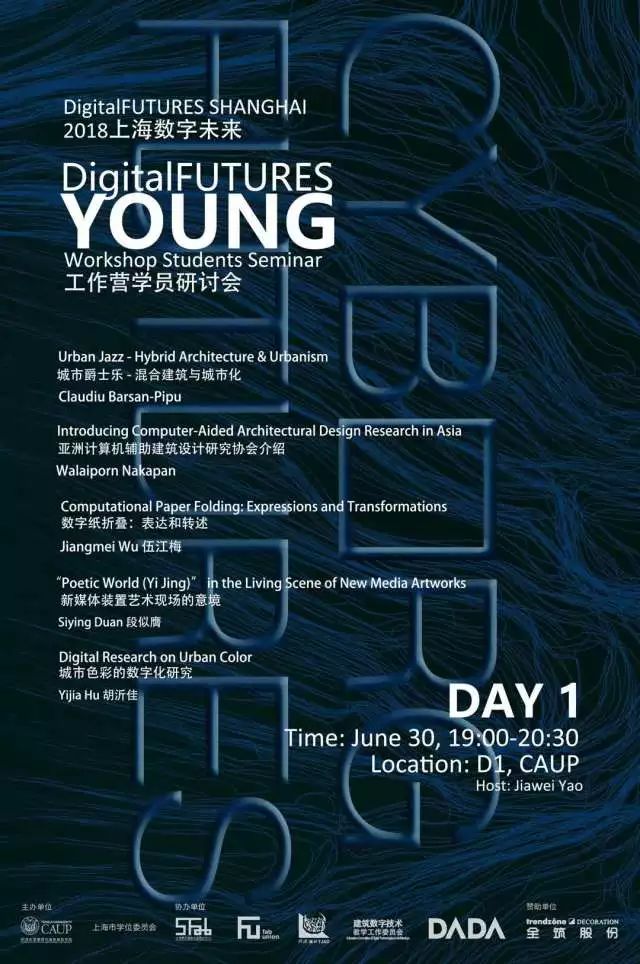
本届工作营推出了DigitalFUTURES YOUNG青年学者计划,包括为期三晚的工作营学员研讨会,旨在为全球数字化设计与建造领域的青年学者们提供学术交流分享的平台,展示DigitalFUTURES Shanghai 2018的优秀学员及学术成果。
The workshop launches DigitalFUTURES YOUNG including workshop student seminars, which aims to provide a platform for young scholars in the field of computational design and digital fabrication and to introduce outstanding students as well as their impressive achievement.
来源:FabUnion返回搜狐,查看更多