全文刊登于《风景园林》2024年第12期P8-9
农业文化景观的可持续治理
Sustainable Governance of Agricultural Cultural Landscape
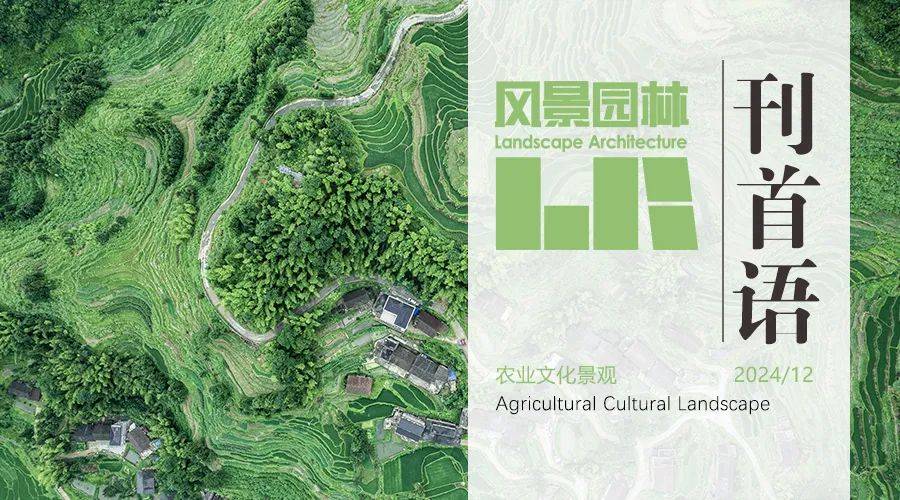
从甲骨文“艺”字中描绘的人手持作物跪敬天地的场景,到英语中“agriculture(农业)”一词的拉丁词源“agri-culture”,农业不仅是维持生计的方式,更是一种深蕴文化智慧与生态实践的表达。历史长河中,人类依水而居,择地而耕,用勤劳与智慧将山川大地转化为兼具生产、生活与生态功能的农业景观。梯田、堤坝、灌溉渠以及乡村聚落,不仅优化了生存条件,还融入了审美价值,形成了顺应自然又被巧妙改造的农业文化景观体系。这些景观以自然为依托,以人类活动为主导,从山川丘壑到农田村舍,记录了人与自然双向塑造的历程。这一历程的关键是人工对自然系统持久的可持续治理。
20世纪50年代,北京门头沟区田寺村的水土保持工作成为泥石流治理工程典范,生动诠释了“人工治理与自然过程”相结合的价值。1950年夏,一场特大暴雨引发泥石流,冲毁大片梯田,村庄满目疮痍。为应对灾害,北京林业大学关君蔚先生通过科学调查,设计了系统治理方案,以生态系统的整体修复为目标,建造了13座拦沙坝、2道护村堤坝,辅以多处谷防坝并种植水土保持林。这一治理工程的成功,源于多方智慧的融合:规划时充分尊重自然地形,结合山体地质、水文特性进行设计,体现了因地制宜的在地性;村民广泛参与治理过程,不仅贡献劳动力,还在传统经验的基础上提出建设性建议;工程未使用钢筋水泥,而是选择黄土和石灰等本地材料,不仅降低了成本,也强化了结构的生态适应性。社区的参与不仅使治理更加高效,还增强了村民对成果的认同感和维护积极性。这些“多级堰坝”式的治水设施在多次暴雨中经受住了考验,使田寺村恢复农业生产功能,并优化了人居环境,展示了结合自然过程的人工治理形成的景观韧性。
70余年后的2023年7月,田寺村再度经历一场特大暴雨。这次,依托20世纪50年代的治理成果,田寺村的受灾程度降到最低。2024年8月,我有机会实地考察了田寺村,沿村庄顺势而上,进入山林谷地和沟壑,70多年前修建的塘坝与谷防坝已完全与自然融为一体,当年种植的水土保持林亦成参天密林。梯田缓解了水土流失,拦沙坝削减了洪水的破坏力,护村堤坝守护了人居安全。这些工程体现了系统性可持续水治理中的生态智慧,治水理念与设施作为一种文化景观也融入田寺村的整体风貌中。在当下,这种理念为应对气候变化和生态修复提供了重要启示。
农业文化景观是综合性生态系统,保护与利用必须注重整体性与系统性。田寺村的治理正是通过山水林田的综合协调,形成了高效、可持续的生态管理模式。这种系统性思维为区域规划与生态治理提供了操作范式,也为农业文化景观保护事业提供了经验。
农业文化景观是土地的记忆,是自然与文化交融的典范。从梯田、堤坝、灌溉渠到乡村聚落,人类对自然的干预是协作与优化。在塑造农业文化景观的过程中,不仅播种了粮食,也播种了希望与传承。联合国粮农组织提出的全球重要农业文化遗产(GIAHS)项目为农业文化景观的保护提供了重要平台。全球多地的梯田系统、水稻种植文化、灌溉工程等都讲述着人与自然共生的故事。这些景观超越国界、跨越时代,为现代社会提供了丰富灵感:从生物多样性保护到气候适应策略,从资源管理到文化旅游开发,每一处农业文化景观都为可持续发展提供了独特路径。在未来的保护与发展中,应坚持深化保护理念,将农业文化景观视为文化与生态的综合体;推动社区参与,让居民成为景观保护的核心力量;创新产业模式,通过文旅融合与生态经济发展,实现活化利用。通过对农业文化景观的生态治理,延续历史智慧,结合现代技术,实现可持续发展。
As can be learned from the oracle bone “ 艺 ”(art) featuring a person kneeling to show respect for heaven and earth with crops in hands to the Latin etymology of “agri-culture”, agriculture is not only a way to make a living but also an expression of profound cultural wisdom and ecological practice. In the long history, human beings have lived by water and farmed on arable, turning the natural landscape into an agricultural landscape with functions of production, living and ecology through hard work and use of wisdom. Terraces, dykes, irrigation canals, and rural settlements not only improve living conditions but also bring aesthetic values, forming a cleverly transformed agricultural cultural landscape system that conforms to the nature. These landscapes are nature-based, orienting to human activities. All mountains, rivers, hills, ravines, farmland and cottages are a record of mutual shaping between man and nature. The key to this process is the lasting and sustainable governance of natural systems by man.
In Tiansi Village, Mentougou District, Beijing, the soil and water conservation in the 1950s was a model of mudslide control engineering, vividly interpreting the value of combining “artificial governance and natural processes”. In the summer of 1950, a mudslide after a heavy rainstorm destroyed large areas of terraces and devastated the village. In response to the disaster, Mr. Guan Junwei of Beijing Forestry University designed a systematic governance plan after scientific investigation. With the goal of the overall restoration of the ecosystem, 13 sand-blocking dams and 2 village-protecting dams were built in the project, supported by a number of retaining dams for falling stones and planted forests for soil and water conservation. The success of this governance was attributable to integration of wisdom from many parties. In the project planning, full respect was paid to the natural terrain with consideration of geological and hydrological characteristics of the mountain, which reflected the adaption to local conditions; villagers participated in the process extensively, where they not only contributed labor but also gave constructive suggestions based on traditional experience; local materials such as loess and lime other than reinforced concrete were used, which not only reduced costs, but also strengthened the ecological adaptability of the structure. The participation of the community promoted the efficiency of governance while enhancing the villagers’ sense of identity with the results and the enthusiasm for its maintenance. These facilities helped restore the agricultural production function of Tiansi Village and improved the living environment as they survived many heavy rains, which shows the resilience of the landscape with combination of artificial governance and the nature.
More than 70 years later, Tiansi Village suffered another heavy rainstorm in July 2023. Owing to the governance results of the 1950s, the disaster was minimized. In August 2024, I walked into the valleys and gills in the forest along the terrains in a field visit to Tiansi Village. The dams and dykes built more than 70 years ago had been completely integrated with nature, and the soil and water conservation forest planted in those years were towering and dense. Terraces have alleviated soil erosion; sand-blocking dams have reduced the destructive power of f loods; and village-protecting dams have ensured the safety of human settlements. These projects reflect the ecological wisdom in systematic and sustainable water governance, where the concept and facilities of water governance as a cultural landscape are also integrated into the overall outlook of the village. Today, this concept provides important inspiration for tackling climate change and ecological restoration.
The agricultural cultural landscape is a comprehensive ecosystem with emphasis on integrity and systematization in protection and utilization. In Tiansi Village, the efficient and sustainable ecological management was achieved through comprehensive coordination of landscape, forest and fields. This systematic thinking offers an operating paradigm for regional planning and ecological governance, as well as experience in protecting agricultural cultural landscapes.
Being a model of the integration of nature and culture, the agricultural cultural landscape carries the memory of the land. From terraces, irrigation canals, dykes to rural settlements, human intervention in nature is collaboration as well as optimization. In shaping the agricultural cultural landscape, humans not only grow grains, but also sow the hope and inheritance. The Globally Important Agricultural Cultural Heritage (GIAHS) proposed by Food and Agriculture Organization of the United Nations provides an important platform for protecting agricultural cultural landscapes. Behind all terraced systems, rice planting cultures, irrigation projects, etc. around the world, there are stories of co-existence between man and nature. These landscapes transcend national boundaries and times, and provide rich inspiration for modern society: from biodiversity conservation to climate adaptation strategies and from resource management to cultural tourism development, each agricultural cultural landscape provides a unique path for sustainable development. In the future protection and development of agricultural cultural landscape, it is necessary to insist on deepening protection and regard it as a complex of culture and ecology; promote community participation to allow residents to serve as the core force of landscape protection; innovate industrial models to realize revitalization and utilization through the integration of cultural tourism and ecological economic development. The ecological governance of the agricultural cultural landscape carries forward the traditional wisdom and can help achieve sustainable development through combination with modern technology.
主编:郑曦
Editor-in-Chief: ZHENG Xi
2024年11月30日
November 30, 2024
完 整深度阅读 请参看《风景园林》2024年12期 返回搜狐,查看更多